5 Home Trends That Will Look Dated (And 3 That Won’t)

Every year I get asked the same question: what home trends are actually going to look dated a few years from now? And honestly, the answer has less to do with whether something is trendy right now and more to do with how it was used. Some trends age badly because they saturated the market so completely that they instantly signal a specific moment in time. Others hold up because they were never really about the moment at all.
Here are 5 home trends I’d think twice about before committing to, and 3 I’d bet on every time.
To learn more about design trends, check out: Trendy vs. Timeless Design: How To Tell The Difference Before You Buy, The ’90s and 2000s Design Trends That Are Actually Coming Back, and How To Incorporate The Trendiest Color Of 2026.
Home Trends That Will Look Dated

home trends that will look dated
1. Patterned Floor Tile
Bold, graphic cement tile dominated for the better part of a decade, used in kitchens, bathrooms, and entryways. From bold designs to Spanish-inspired, the problem is exactly what made it popular: it’s a floor, it’s expensive to replace, and it’s now so tied to one design era that it reads instantly as dated, like a very specific tile pattern from the 1970s does today.

home trends that will look dated
2. Bouclé Upholstery
That nubby, textured bouclé fabric took over sofas, chairs, and headboards for years, and it did so almost universally. The same cream-colored bouclé armchair has shown up in nearly identical form across countless homes and price points. That level of saturation is exactly what tends to date a material fastest. It’s less that bouclé itself is a bad choice and more that using it as the default texture for every upholstered piece is starting to feel like a very specific, very recent moment rather than a lasting one.

home trends that will look dated
3. Scalloped Everything
Scalloped mirrors, scalloped side tables, scalloped lampshades- this detail hit so hard and so fast across every price point that it’s already starting to feel like a very specific, very recent moment rather than a lasting design choice.

home trends that will look dated
4. Shiplap and Farmhouse Everything
Shiplap walls, barn-style accents, and an overall “modern farmhouse” look absolutely dominated for the better part of a decade. It got so widespread and so specific in its formula- white shiplap, black hardware, a farmhouse sink- that it now reads as tied to one very particular design moment rather than a lasting architectural choice. Unless you live in an actual farmhouse, use these elements sparingly to avoid an overly trend-driven interior.

home trends that will look dated
5. Overhead Recessed Lighting
A room lit entirely by can lights in the ceiling was once considered the modern standard, but it’s increasingly seen as flat, sterile, and one-dimensional. Incorporating can lights is still fine (as long as they are on a dimmer switch), but they should not be your only or primary source of lighting. Ceiling fixtures, floor lamps, and table lamps should also be incorporated for the most flattering light that doesn’t feel dated (and unflattering).
Home Trends That Won’t Look Dated
1. Layered Lighting
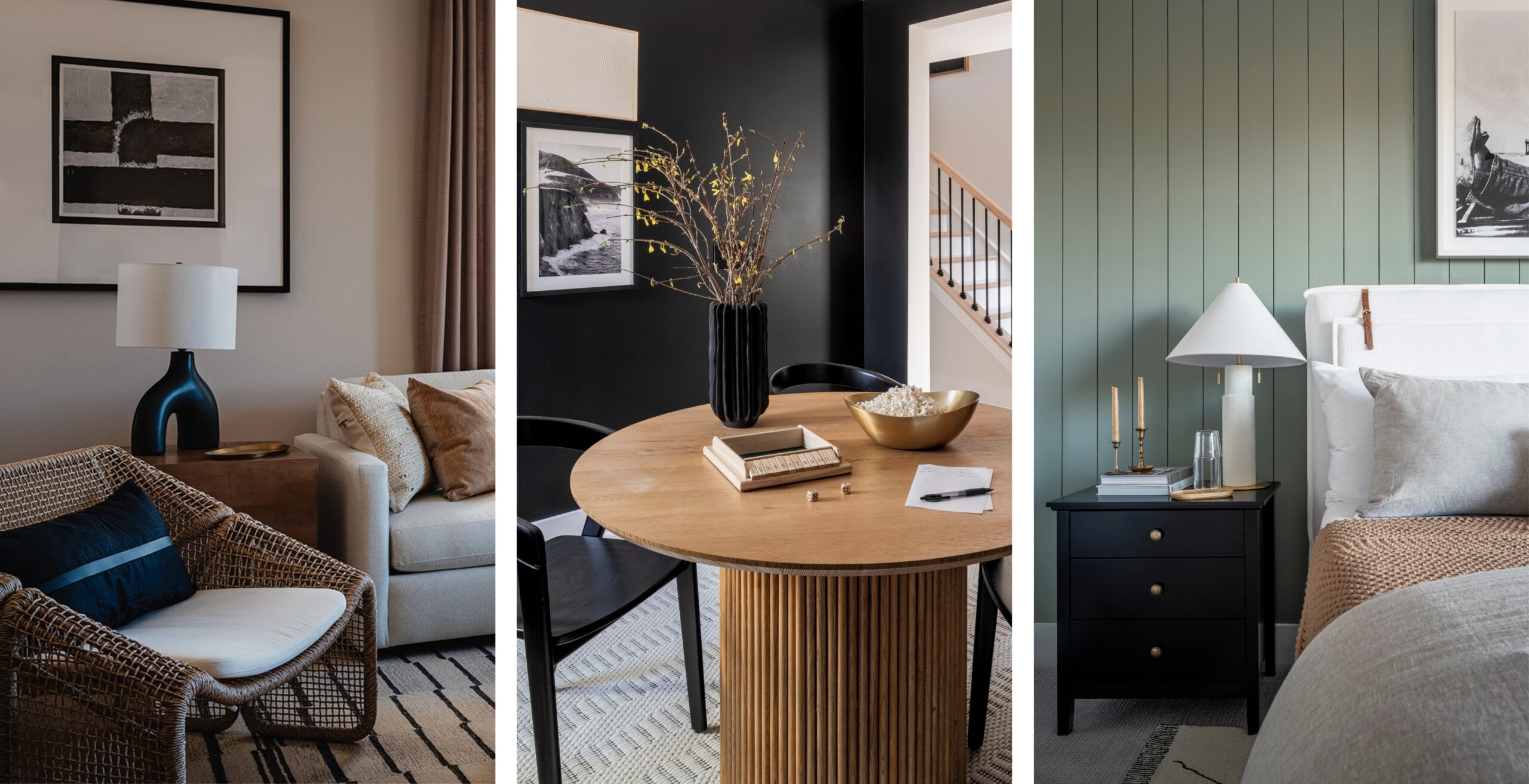
A room with ambient, accent, and task lighting working together will never look dated because it’s not actually a trend – it’s just good lighting design. It gives a space real depth and mood in a way a single overhead fixture simply can’t, regardless of what year it is.
2. Warm Wood Tones, Used Selectively
A well-chosen warm wood tone, brought in through one or two pieces rather than blanketing an entire room, has read as timeless for decades and will keep doing so.
3. Classic Furniture Silhouettes
A well-proportioned sofa arm, a simple cabinet door profile, a chair with clean, considered lines- these shapes don’t chase trends because they were never trend-driven to begin with. As I’ve said before, it’s the finish and color that tend to date a piece, not a genuinely good, timeless silhouette.
Home Trends That Will Look Dated
Frequently Asked Questions
If a trend is popular right now, does that automatically mean it will look dated later?
Not necessarily. The trends that age the worst are usually the ones that saturate the market completely and get used the same way in every single home: patterned floor tile, scalloped everything, all-gray palettes. A trend used sparingly and personally tends to age much better than one used as a total design formula.
Is it ever worth doing a “dated” trend anyway if I love it?
Of course, if you genuinely love a look, use it in a lower-commitment way: a pillow, a lampshade, a small accent piece, rather than a floor or cabinetry you’re stuck with for a decade. That way you get to enjoy it without the long-term risk.
How can I tell if a design choice is a genuine classic or just a trend I haven’t gotten tired of yet?
Ask whether the look is showing up identically across every price point and every home you scroll past right now. That kind of total market saturation is usually a sign it’s a trend, not a classic. Genuine classics tend to show up more selectively and evolve slightly over time rather than being replicated exactly everywhere at once.
What’s the easiest way to update a room that has a lot of these dated trends?
Start with lighting. Swapping overhead-only lighting for a mix of lamps and sconces is one of the fastest, least expensive ways to change how a room feels. After that, look at whichever surface has the most repetition of a single material or pattern. That’s usually the biggest visual signal of “one specific era” in a room.
Do these predictions apply to every home, or does personal style matter more?
Personal style always matters more than any trend prediction, mine included. The goal isn’t to avoid every trend on this list. It’s to be intentional about which ones you commit to permanently versus which ones you experiment with in smaller, easier-to-change ways.