
Handmade Home Decor: Why Artisan Design Is Back | Bobby Berk

For years, interior design celebrated clean lines, polished finishes, and that “just out of the box” perfection. But lately, design has taken a softer and more authentic turn — and honestly, I’m here for it. Everywhere I look, there’s a renewed love for things that feel human. A hand-thrown vase that’s a little uneven. A meticulously carved wooden chair. Wall finishes that show brushstrokes. To me, these aren’t flaws — they’re fingerprints of creativity.
In an increasingly digital world, we’re collectively craving connection in our homes — to materials, to makers, to meaning. And that’s exactly what handmade home decor brings back into our spaces, and why I’m embracing it (and you should too!)
See more home decor trends: The Trendiest Color of 2026 and The 2000s Trends That Are Coming Back.

handmade home deor
What’s Driving Handmade Home Decor?
So, what’s behind this wave of handmade and an increased focus on craftsmanship?
It’s part cultural shift, part creative rebellion. After years of mass production and “fast décor,” I think people are starting to slow down — and they’re realizing that quality, craftsmanship, and imperfection add layers that no machine can replicate. Our lives are also increasingly digital, and as an antidote, we are now craving things that are more tactile and material. Everything from printed photo albums to hand-painted art, to lighting hand-poured candles, to purchasing and playing vinyl records connects us to the physical act of creation.
Social media also helped accelerate the handmade movement. Short videos showing the process — a potter shaping clay, a weaver threading a loom, a painter working on a canvas — are accessible to everyone, and connect us to the soul of the object. Suddenly, the “how” became just as beautiful as the “what.”

handmade home deor
The Beauty of Imperfection
Part of handmade design is also about embracing and celebrating imperfection. And that is the essence of Wabi-Sabi, the Japanese philosophy of finding beauty in imperfection and impermanence. And it’s also at the heart of this new craft movement.
Wabi-sabi interiors don’t chase symmetry or spotless finishes. Instead, they celebrate texture, honesty, and time. Think plaster or limewash walls with a subtle hand-troweled look. A ceramic lamp base with a glaze that fades unevenly. Or a linen sofa that looks better a little rumpled. These small imperfections remind us that our homes are meant to be lived in — not preserved like museums.
Kintsugi -the art of repairing broken pottery with gold – is another Japanese art form that embraces imperfection. Instead of hiding the break, kintsugi highlights it. The crack becomes the most beautiful part of the piece, traced in precious metal for everyone to see. We spend so much energy trying to make everything look seamless and brand-new, but kintsugi asks a completely different question: What if the history of an object is what makes it valuable?
In today’s modern spaces, this philosophy balances beautifully against minimal architecture. The smooth meets the textured; the refined meets the raw. A sleek kitchen feels instantly warmer with handmade tile. A monochrome living room gains depth when a handwoven throw or a slightly uneven vase enters the scene. It’s also good to remember, imperfection doesn’t mean messy. It means intentional. When thoughtfully placed, an artisan-made object can anchor an entire space with quiet confidence.


handmade home deor
Adding Handmade Design To Your Home
Here’s the good news: you don’t need to overhaul your entire home to embrace the craft revival. In fact, handmade design shines brightest when it’s mixed with the modern pieces you already have.
Start with texture — the secret ingredient that makes a space feel layered and lived in. If your living room leans sleek or minimal, try adding a handwoven wool rug. These subtle, tactile pieces balance out sharper lines and inject instant warmth. Next, think contrast. A sculpted wood coffee table beside a modern sectional creates visual rhythm. Pair a hand-thrown vase with a polished marble countertop. Or offset smooth cabinetry with handcrafted tile that shows a little variation in tone. These small shifts add character without chaos.
handmade home deCor
Room by Room — Where Handmade Design Makes the Biggest Impact
The Kitchen
If there’s one room where handmade design makes an immediate, dramatic difference, it’s the kitchen. And the move I always recommend first? Handcrafted tile. A zellige backsplash — those gorgeous Moroccan tiles with their uneven glazes and subtle color shifts — will completely change the energy of a kitchen. Beyond tile, think about the objects you use and display every day. A set of handmade ceramic bowls on open shelving. A hand-carved wooden cutting board leaning against the backsplash. A hand-thrown pitcher you actually use for water at dinner.
The Living Room
The living room is where texture becomes your best friend. If your sofa and coffee table are clean-lined and contemporary (which I love, by the way — not everything needs to be rustic), the fastest way to add warmth is through handwoven textiles. A chunky wool throw draped over the arm of a sectional. A handwoven rug with subtle irregularities in its pattern. I also love the impact of a single handmade statement piece in a living room. A sculptural ceramic vase on the mantel. A hand-carved wooden stool used as a side table.
The Bedroom
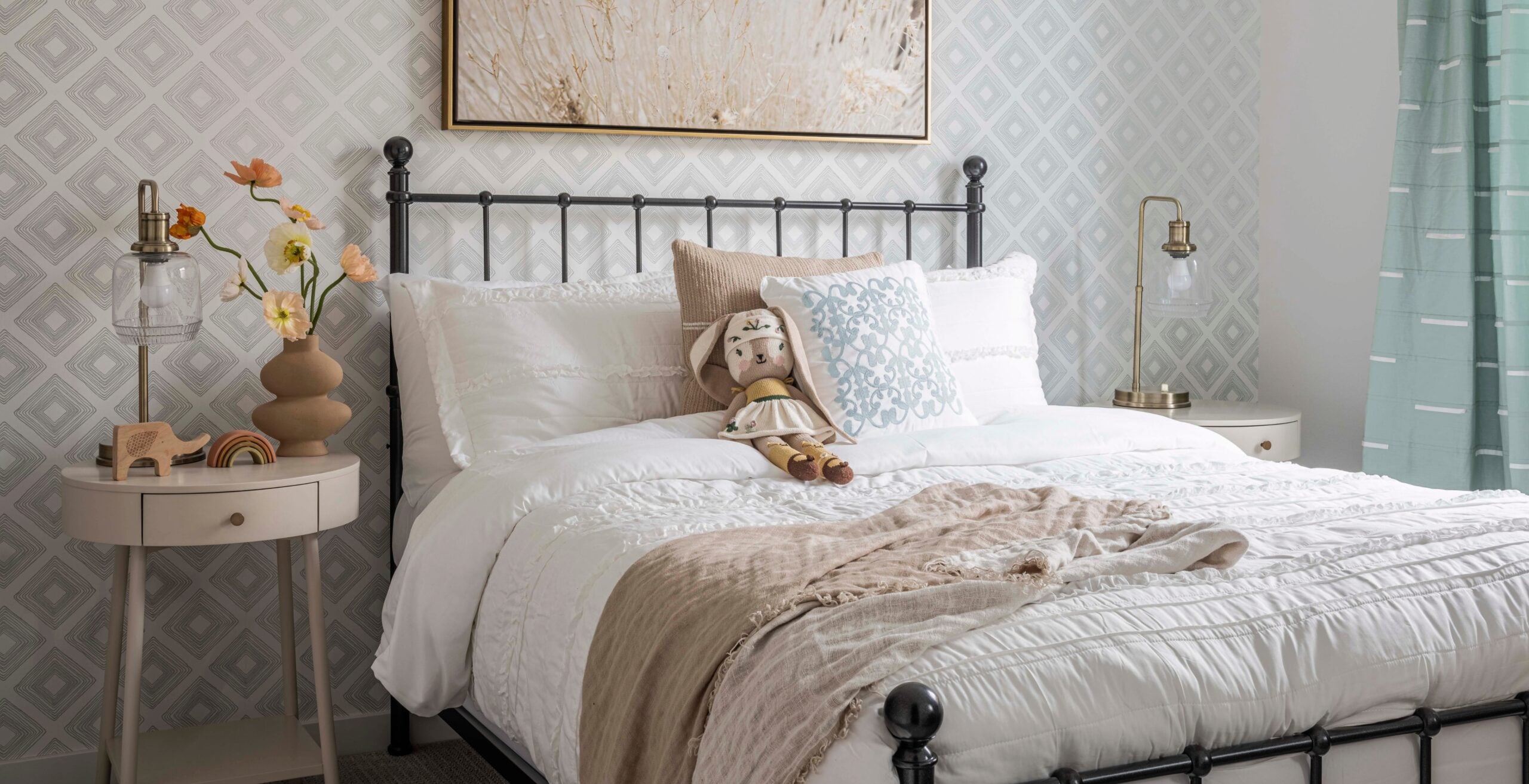
The bedroom is where handmade design should feel the most personal and the most quiet. This isn’t the room for bold statements — it’s where subtle craft details make you feel genuinely at ease. Start with your bedside table: a handmade ceramic lamp with a slightly organic shape and a linen shade instantly feels softer and more inviting than anything mass-produced. Add a small hand-thrown dish or tray for jewelry or keys — something you touch every morning and every night.
handmade home deCor
Where To Shop Handmade Home Decor
If you love shopping with intention, explore artisan home décor made in small batches. Look for collections that highlight the maker’s story — a tag signed by hand, or a piece made from reclaimed materials. Platforms like The Citizenry, Etsy, or even local weekend markets are filled with treasures that carry both beauty and purpose.
In a world obsessed with new, there’s something grounding about the handmade. It reminds us that beauty isn’t flawless — it’s human. And when you surround yourself with pieces crafted with care, your home doesn’t just look designed… it feels loved
What handmade pieces have you brought into your home? Drop a comment below
How can I get information on how to apply to be on Bobby’s show , Junk or Jackpot ?
I have many antiques & objects of interest , lots of artwork & collectibles . A chair which I was told was in a Masonic Temple & a table that I was told came from the 17th century .