Beginner Sourdough Bread Recipe: Step-by-Step Guide

Sourdough has 368,000 monthly searches in 2026, and the trend is not slowing. The pandemic-era sourdough boom never fully ended. People who started in 2020 kept their starters alive. They kept baking. New people join the community every month. It is one of the most consistently searched recipes on the internet.
I learned to bake sourdough the slow way, which is the only way. I burned the first three loaves. The fourth was edible. The seventh was actually good. By the tenth, I had a recipe I trusted, a schedule that fit my life, and a loaf I could put on the table when friends came over and feel proud about.
This is that recipe. Built for beginners. Forgiving on timing. No special equipment beyond a Dutch oven and a kitchen scale. I have written it the way I wish someone had written it for me when I was starting. With actual schedules. With actual troubleshooting. With permission to fail a few times.
The first time you pull a real sourdough loaf out of the oven (with a deep crackled crust, an open airy crumb, the ear standing up dramatically), you will understand why people get obsessed with this. It is one of the genuinely magical things you can do in a kitchen.
See more of my favorite trending recipes: Hot Honey Chicken, Chimichurri Steak, and Chia Pudding.
Beginner Sourdough Bread Recipe
What is Sourdough
Sourdough is bread leavened by wild yeast and bacteria instead of commercial yeast. The leavening comes from a “starter,” which is a paste of flour and water that has been colonized over time by naturally-occurring wild yeast (from the flour, the air, your hands) and lactobacillus bacteria. The yeast produces carbon dioxide, which makes the bread rise. The bacteria produce acids, which give sourdough its characteristic tangy flavor.
A starter is alive. You feed it. It grows. If you neglect it for too long, it dies. Once you have a healthy starter, you can bake bread from it forever. People have starters that have been passed down for generations. The flavor of sourdough is fundamentally different from yeast bread because of those bacterial acids. The long fermentation also breaks down some of the gluten and phytic acid in the flour, which makes sourdough easier to digest than most commercial bread.
Beginner Sourdough Bread Recipe
Why This Recipe Works
Sourdough is just bread, water, salt, and time. The recipes that fail are the ones that try to control too many variables. The recipes that work treat time as the most important ingredient. Three rules I live by.
Weigh Everything
Cups are lies in bread baking. The amount of flour in a cup can vary by 30% depending on how it is scooped. A kitchen scale is fifteen dollars and changes your whole game.
An Active Starter Doubles in Size with 4 to 6 Hours After Feeding
If yours is not doubling, do not bake yet. Feed it again. Wait. A weak starter produces a dense loaf.
The bulk ferment is done when the dough has risen about 50%, and the surface is dotted with bubbles.
Trust the dough, not the clock. Kitchen temperature affects this dramatically. A warm kitchen ferments fast. A cold kitchen takes longer.

Beginner Sourdough Bread Recipe
The Equipment You Need
Kitchen scale. Non-negotiable.
Large mixing bowl. 4-quart or larger.
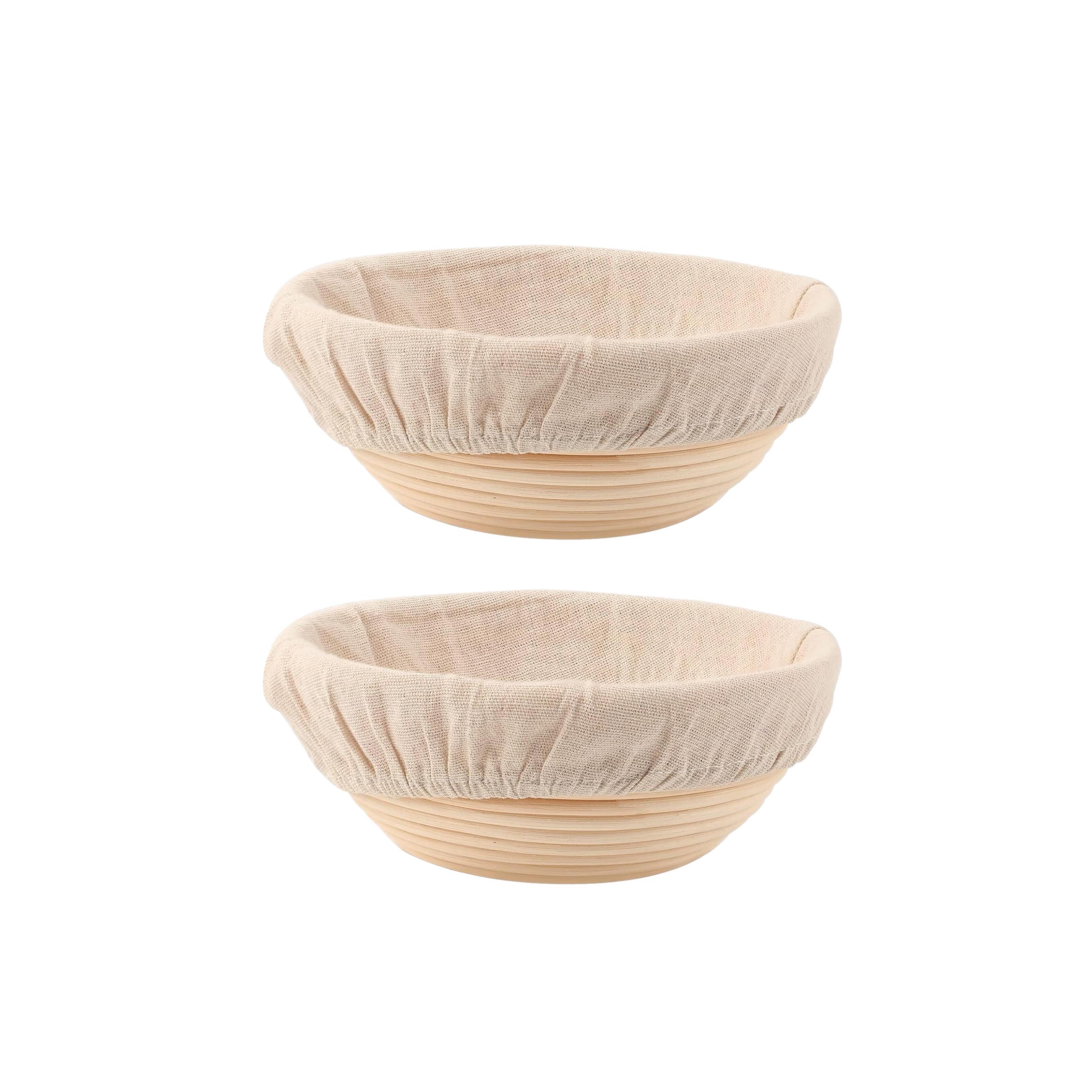
Banneton (proofing basket) or a bowl lined with a floured tea towel. The banneton holds the shape of the dough during the cold proof and creates the spiral pattern you see on artisan loaves.
Dutch oven with a lid. 5 to 6 quart, oven-safe to 500°F. Cast iron with enamel is ideal. The Dutch oven traps steam, which is what gives sourdough its dramatic oven spring and crackled crust.
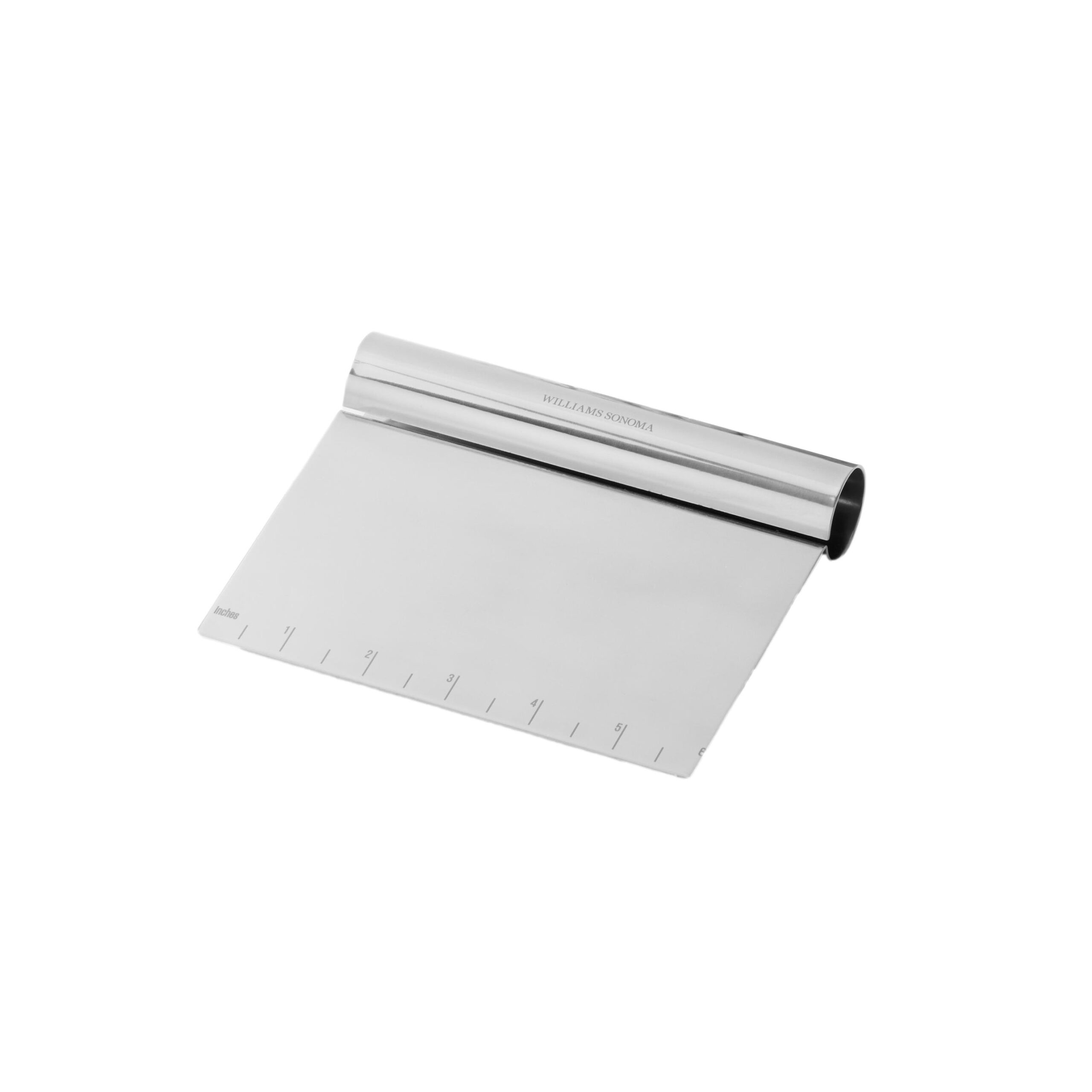
Bench scraper. A flat metal or plastic blade for handling dough.
Lame or sharp knife. For scoring the loaf before baking.
Parchment paper. For transferring the dough into the hot Dutch oven.




Beginner Sourdough Bread Recipe
The Schedule
Sourdough is not hard, but it requires you to be home for portions of a day. Here is the schedule I use, which fits a normal weekend:
-
Saturday
9 a.m. Feed your starter
1 p.m. Starter is ready (doubled). Mix the dough.
1:30 p.m. First stretch and fold
2 p.m. Second stretch and fold
2:30 p.m. Third stretch and fold
3 p.m. Fourth stretch and fold
3 to 7 p.m. Bulk ferment on the counter
7 p.m. Shape the loaf, place in banneton
7:30 p.m. Cover, refrigerate overnight (cold proof) -
Sunday
8 a.m. Preheat oven and Dutch oven
9 a.m. Bake the loaf
10:30 a.m. Cool the loaf for 1 hour
11:30 a.m. Slice and eat fresh bread

Beginner Sourdough Bread Recipe
Ingredients
FOR ONE LOAF:
100g active sourdough starter
(bubbly, doubled in size within the last 6 hours)
To make your own, mix equal parts (by weight) of flour and water. Cover loosely. Feed daily by discarding half and adding fresh flour and water. After 7 to 10 days, you should have a bubbly, active starter. Or buy one
375g Warm Water
(about 80°F, lukewarm to the touch)
500g Bread Flour
(King Arthur, Bob’s Red Mill, or any flour labeled “bread flour”)
10g Fine Sea Salt
(kosher works, just not iodized)
That is it. Four ingredients. The rest is technique.

Beginner Sourdough Bread Recipe
Instructions
Step 1: Mix (1:00 p.m.)
In a large bowl, whisk together the starter and warm water until smooth and milky. Add the flour. Mix with a spatula or your hands until no dry flour remains. The dough will be shaggy and rough. Cover with a damp tea towel. Let it sit for 30 minutes. This is the autolyse step, where the flour fully hydrates.
Step 2: Add the salt (1:30 p.m.)
Sprinkle the salt evenly over the dough. Wet your fingers and pinch and squeeze the salt into the dough. You are working it in. After about a minute, the dough should be evenly seasoned and feel slightly stretchier than before.
Step 3: Stretch and folds (1:30 to 3 p.m.)
Every 30 minutes for the next two hours, do a stretch and fold. Here is the technique:
1. Wet your hand with cool water.
2. Reach under one side of the dough.
3. Pull it up gently (it should stretch significantly).
4. Fold it over the top of the dough toward the opposite side.
5. Rotate the bowl 90 degrees.
6. Repeat three more times until you have stretched and folded from all four sides. Cover the bowl. Set a timer for 30 minutes. Repeat. Do 4 total sets of stretch-and-folds.
Each set should feel slightly stronger than the last. By the fourth set, the dough should feel taut, smooth, and elastic.
Step 4: Bulk ferment (3 to 7 p.m.)
After the fourth stretch and fold, cover the bowl and let the dough rest at room temperature. This is the bulk ferment, where the wild yeast does the bulk of its rising work.
You are waiting for the dough to rise about 50%. In a kitchen at 75°F, this usually takes 3 to 4 hours. In a cold kitchen (under 70°F), it can take 5 to 6 hours. In a hot kitchen (over 80°F), it can take 2 to 3 hours.
The dough is done with bulk ferment when: – It has risen 50% (not doubled) – The surface is smooth and slightly domed – Small bubbles are visible on the surface and along the sides of the bowl – The dough feels lighter and jigglier than it did at the start
Step 5: Shape (7 p.m.)
Lightly flour your work surface. Turn the dough out onto the surface.
Pre-shape:
1. Fold the dough into a loose round by pulling the edges toward the center.
2. Flip it seam-side down.
3. Let it rest for 20 minutes uncovered.
Final shape:
1. Lightly flour the top of the dough.
2. Flip it floured-side down using a bench scraper.
3. Fold the bottom third up to the middle.
4. Fold the top third down to overlap.
5. Fold the right side in. Fold the left side in. You should have a rectangle-ish bundle.
6. Roll the dough tightly from one short end to the other, like a sleeping bag.
7. Place seam-side up in a heavily-floured banneton.
Step 6: Cold proof (7:30 p.m. to next morning)
Cover the banneton (a shower cap or plastic bag works) and refrigerate for 8 to 16 hours. The longer the cold proof, the tangier the loaf. Eight hours gives you mild sourdough. Sixteen hours gives you bold sourdough.
Step 7: Bake (next morning)
-
Preheat: Place the Dutch oven (with lid on) in the center of the oven. Set the oven to 500°F. Let it preheat for 45 to 60 minutes. The Dutch oven needs to be ripping hot.
Score: Pull the banneton out of the fridge. Tip the dough out onto a piece of parchment paper, seam-side down. Score the top with a lame or sharp knife. A single deep slash down the center is the easiest beginner score. Cut about 1/2 inch deep at a 45-degree angle.
Bake:
1. Carefully remove the hot Dutch oven from the oven.
2. Lift the parchment with the dough on it and place it into the Dutch oven.
3. Cover with the lid.
4. Bake at 500°F for 20 minutes.
5. Lower the temperature to 450°F. Remove the lid. Bake for another 20 to 25 minutes, until the crust is deep brown and the internal temperature is 205 to 210°F.
Cool:
Transfer the loaf to a wire rack. Cool for at least one hour before cutting. I know this is the hardest part. Do not cut into warm sourdough. The crumb will be gummy, and the bread will collapse.
Beginner Sourdough Bread Recipe
Tips From My Kitchen
Take Notes in Every Loaf
Write down your kitchen temperature, your timing, your starter’s activity level, and your bake notes. The first ten loaves will teach you more about your kitchen than any book.
The Windowpane Test
During the stretch and folds, you can test the gluten development by pulling a small piece of dough and stretching it slowly. If you can stretch it until it is translucent without tearing, the gluten is developed. If it tears immediately, do another stretch and fold.
Underbaked Sourdough is Worse Than Overbaked
When in doubt, bake longer. A dark crust is your friend. A pale crust is sad.
Use a Benchscrapper for Everything
Shaping, cleaning, and lifting dough. Cheap, indispensable.
Steam is the Secret to the Crust
The Dutch oven traps steam from the dough itself in the first 20 minutes of baking. The steam keeps the crust pliable so the loaf can spring up before it sets. Without steam, you get a thin, brittle crust and a smaller loaf.
A Cold Proof is Non-Negotiable for Beginners
It dramatically slows the fermentation, makes the dough easier to shape, and gives you better flavor development. Skip it, and the loaf will be flatter and less flavorful.

Beginner Sourdough Bread Recipe
Common Problems & Fixes
Dense Loaf, Gummy Crumb
Most likely undershot the bulk ferment, or your starter was not active enough. Make sure your starter is doubling within 6 hours of feeding, and let the dough rise 50% before shaping.
Loaf Spread out Flat
Overproofed (let it rise too long in bulk) or weak shaping. The dough should be firm
and taut after shaping. If it spreads when you turn it out, you overproofed.
No Oven Spring
The dough was overproofed before baking, or the Dutch oven was not hot enough. The Dutch oven needs to
Crust is Pale
Underbaked. Bake longer. The crust should be deep brown, almost burnt-looking in places.
Inside is Wet
Did not cool long enough before cutting, or underbaked. The internal temperature should be 205 to 210 degrees F
Loaf Stuck to Banneton
Not enough flour on the banneton, or the banneton was wet. Heavily flour it next time. If the loaf sticks, use a flexible bench scraper to gently release.
Beginner Sourdough Bread Recipe
Frequently Asked Questions
How do I store Sourdough?
Sourdough keeps cut-side down on a cutting board for 2 days, no wrapping needed. After that, slice and freeze in a zip bag. Toast straight from frozen. A bread bag (linen or cotton) keeps a loaf fresh on the counter for 3 days. Do not refrigerate sourdough. It dries out fast.
Where do I get a Sourdough Starter?
Make your own, ask a friend, or buy one. See above.
Why is my Loaf Dense?
Either your starter was not active enough, or you undershot the bulk ferment. Trust the visual cues, not the timer.
Can I Bake without a Dutch Oven?
Yes. Bake on a sheet pan with a tray of water on the bottom rack for steam. The crust will not be as dramatic.
What is the difference between Bread Flour and All-Purpose Flour?
Bread flour has more protein (about 12 to 14%), which develops more gluten and gives sourdough its structure. All-purpose flour (10 to 11% protein) can work but produces a denser, less open crumb.
How long does it take to make a Starter from Scratch?
7 to 10 days for a basic active starter. 2 to 3 weeks for a truly strong, mature starter.
What if I miss a Feeding?
Starters are forgiving. A day or two without feeding will not kill them. A week without feeding might. If your starter has not been fed in over a week, feed it twice daily for 3 days to revive it.
it.
Can I make a Sourdough with Whole Wheat or Rye Flour?
Yes. You will need to adjust the hydration up (whole grains absorb more water), and the bulk ferment may go faster. Start with 20% whole grain flour and work up.
Why is Sourdough Easier to Digest?
The long fermentation breaks down some of the gluten and phytic acid in the flour. People who have mild gluten sensitivity often tolerate sourdough better than commercial bread.
What does “Discard” mean in Sourdough?
When you feed a starter, you usually discard half of it first to prevent it from getting too large. The discard is not waste. Use it for pancakes, crackers, biscuits, pizza dough, focaccia, and dozens of other recipes.
Beginner Sourdough Bread Recipe
Why I Keep Making This
Sourdough taught me patience. Most cooking is about controlling variables and getting results fast. Sourdough is about giving up that control and letting time do most of the work. You feed the starter. You wait. You shape. You wait. You bake. You wait. The bread happens on its own schedule.
That patience translates back into the rest of life. The discipline of waiting for the bulk ferment to be ready, not when I want it to be ready, has helped me with other things. Projects. Conversations. Decisions.
And there is a specific Sunday morning ritual I have built around it. Pulling the cold-proofed loaf out of the fridge. Preheat the Dutch oven. Scoring the top of the dough. Sliding it into the heat. The kitchen filled with the smell of bread for the next hour. Cutting into the loaf an hour later, watching the steam rise, hearing the crackle of the crust. Spreading good butter on a warm slice. Drinking a slow coffee. That ritual is the whole point. The bread is the excuse.