A Guide To Lightbulbs: The Right Options For Every Room

I’ve said it before, and I’ll say it again: lighting is the thing I’d fix first in almost any room. And the easiest, cheapest way to fix it is also the one people overlook, which is the bulb itself. The wrong bulb can make a beautiful living room feel like a waiting room, and the right one can make a simple space feel warm and expensive.
The problem is that the lightbulb aisle looks like a science exam. Lumens, Kelvin, CRI, A19, E26. Here’s the good news: once you know what a few of those numbers mean, choosing a bulb takes about thirty seconds. Here’s a guide to lightbulbs – and the right one for every room.
For more lighting help, check out How To Find The Right Bedside Lamp and The Complete Guide To Hanging Lighting.

Photo: Kara Mercer
A Guide To Lightbulbs
Forget Watts. Look At Lumens.
For years we shopped for bulbs by wattage, but watts only measure how much energy a bulb uses, not how bright it is. Lumens measure brightness. Since LEDs use far less energy than the old incandescent bulbs (and traditional incandescents have been largely phased out in the U.S.), lumens are the number to look at on the box.
Here’s how lumens translate to the old wattage you might be used to:

A Guide To Lightbulbs
Kelvin Is The Color Of The Light
Kelvin (K) tells you how warm or cool the light looks. A lower number is warmer and more golden, and a higher number is cooler and bluer.
- 2200K to 2700K: Very warm, like candlelight. Cozy and relaxing.
- 3000K: Warm white. Soft but a little crisper.
- 3500K to 4000K: Neutral white. Clean and bright.
- 5000K and up: Daylight. Crisp, cool, and often harsh in a home.
A quick tip: don’t always trust the names on the packaging. “Soft white,” “warm white,” and “daylight” mean different things from brand to brand, so go by the Kelvin number.
A Guide To Lightbulbs
CRI Tells You How Good Colors Look
CRI stands for color rendering index, and it measures how accurately a bulb shows true colors, on a scale up to 100. A low-CRI bulb can make wood, fabric, art, food, and skin look dull or slightly off. For most rooms, look for a CRI of 90 or higher, and it matters most in kitchens, bathrooms, and closets.


Photo: Kara Mercer
A Guide To Lightbulbs
The Living Room
This is a comfort room, so warm light is the goal. I stick to around 2700K, and I split the light across several sources, like table lamps, floor lamps, and a softer overhead, rather than one bright fixture. Put everything on a dimmer if you can.
The Bedroom
Keep it warm, soft, and low, with 2700K or lower. Bedside lamps with a gentle 450 lumen bulb are plenty for reading. Light that’s cooler than about 3000K in the evening can interfere with winding down, so I keep bedrooms on the warm end.
The Dining Room
Warm light and a dimmer make food, wood, and faces look their best. If you have a chandelier, you’ll likely need smaller candelabra bulbs, so check the base size before you buy.

Photo: Kara Mercer
A Guide To Lightbulbs
The Kitchen
This is where I go a little brighter and a little crisper, usually 3000K to 3500K, with a CRI of 90 or higher so food and finishes look right. Use brighter bulbs for task areas, like under the cabinets or over the island, and keep the rest warm and inviting.
The Bathroom
Choose a neutral-to-warm white, around 3000K to 4000K, with a high CRI at the vanity. I avoid 5000K bulbs in a bathroom, since they can be unflattering. Globe bulbs (G25) on either side of the mirror give even, flattering light.
The Home Office
You want to feel alert without feeling like you’re in an operating room. I’d stay around 3500K to 4000K, and use a desk lamp with an adjustable arm for tasks.
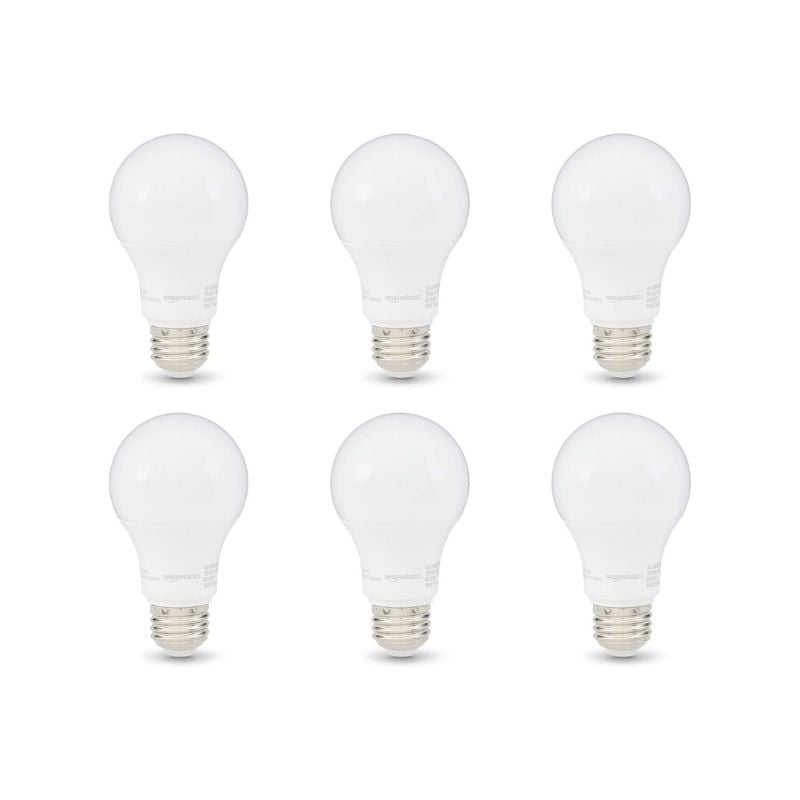
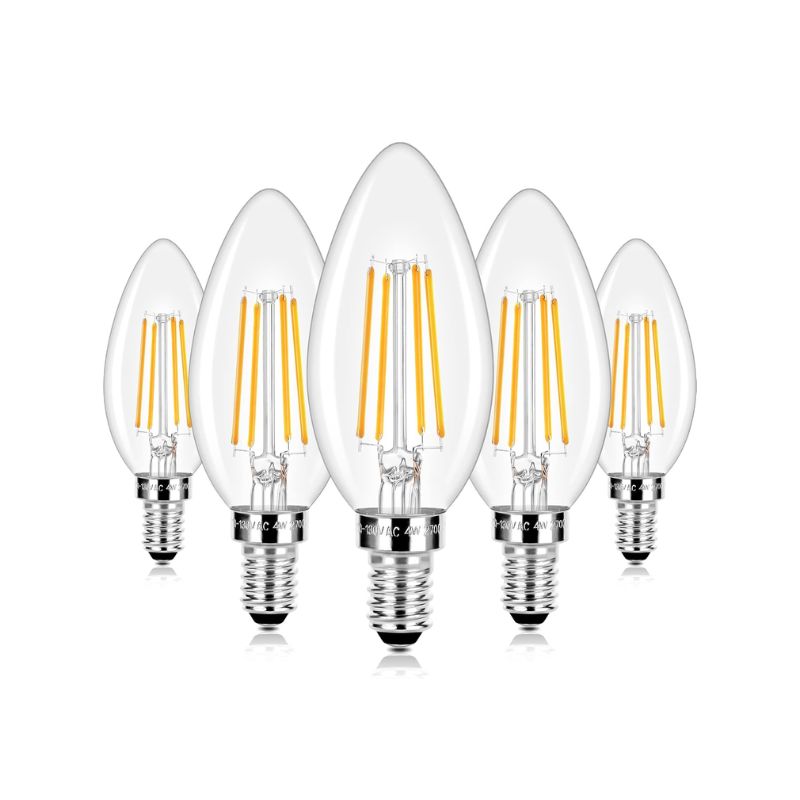
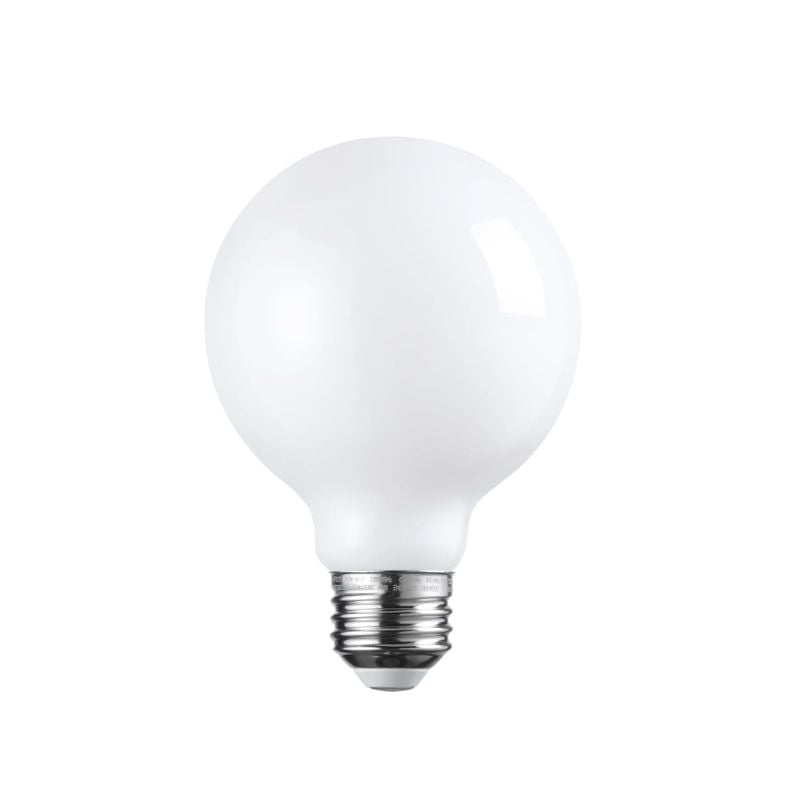
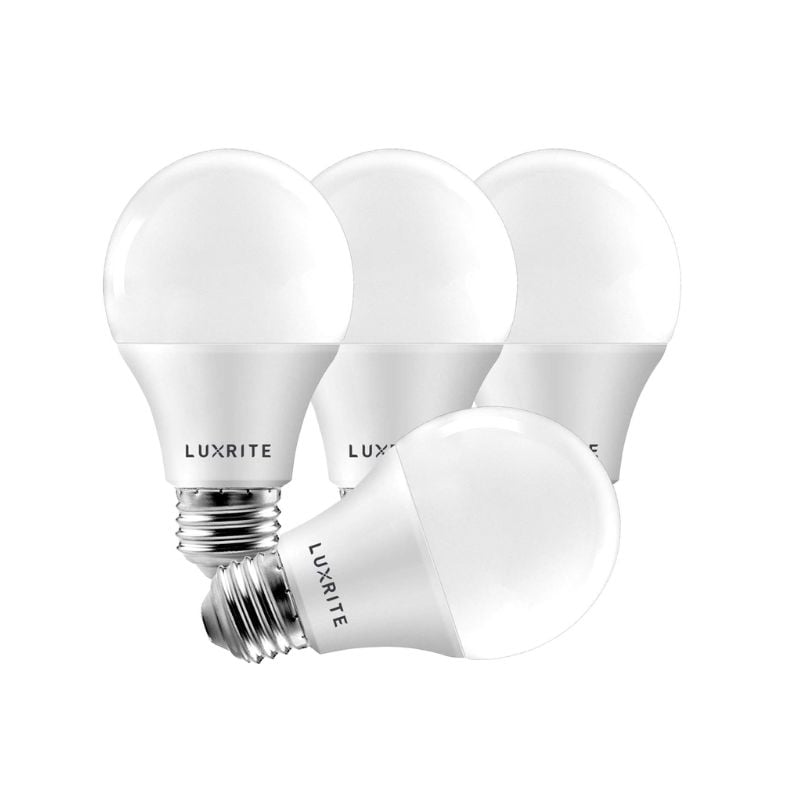
A Guide To Lightbulbs
Know Your Bulb Shapes
Before you buy, check the shape and the base so the bulb actually fits.
*Most standard U.S. lamps use a medium base (called E26), and chandeliers often use a smaller candelabra base (E12). If you’re not sure, bring the old bulb to the store.

A Guide To Lightbulbs
Frequently Asked Questions
What’s the best light bulb for a living room?
I’d choose a warm, dimmable LED around 2700K, with a CRI of 90 or higher. For lamps, 450 to 800 lumens per bulb works well depending on how bright you like the room.
What does Kelvin mean on a light bulb?
Kelvin measures the color of the light. Lower numbers, like 2700K, look warm and golden, while higher numbers, like 5000K, look cool and bluish.
How many lumens do I need?
It depends on the room and the fixture. As a rule of thumb, 450 lumens is soft, 800 is standard, and 1,100 or more is bright. Rooms usually need light from several sources, so think in layers instead of one big bulb.
What does CRI mean, and does it matter?
CRI is the color rendering index, or how accurately a bulb shows colors. For kitchens, bathrooms, closets, and anywhere you want colors to look right, choose 90 or higher.
Why are my dimmable bulbs flickering?
The most common cause is a mismatch between the bulb and the dimmer. Make sure the bulb is labeled dimmable, the dimmer is rated for LEDs, and check the manufacturer’s compatibility list if the problem continues.
Are LED bulbs worth it?
Yes. They use much less energy than the old incandescent bulbs, and they often last many years, so they cost less in the long run.
Can I use different color temperatures in the same room?
I wouldn’t. A mix of warm and cool bulbs can make a room feel unbalanced. Pick one Kelvin range per room, and keep it consistent across lamps and fixtures.
What’s the best light bulb for a bathroom vanity?
A globe bulb (G25) between 3000K and 4000K with a CRI of 90 or higher. It gives even, flattering light for getting ready.
Are smart bulbs worth it?
They can be, especially if you like adjusting brightness and color from your phone, or setting a warm glow at night. Many smart bulbs let you shift from warm to cool light, so one bulb can work for different moods. If you want something simple, a regular dimmable LED and a good dimmer switch do the job.