How to Build a Whole Home Paint Palette

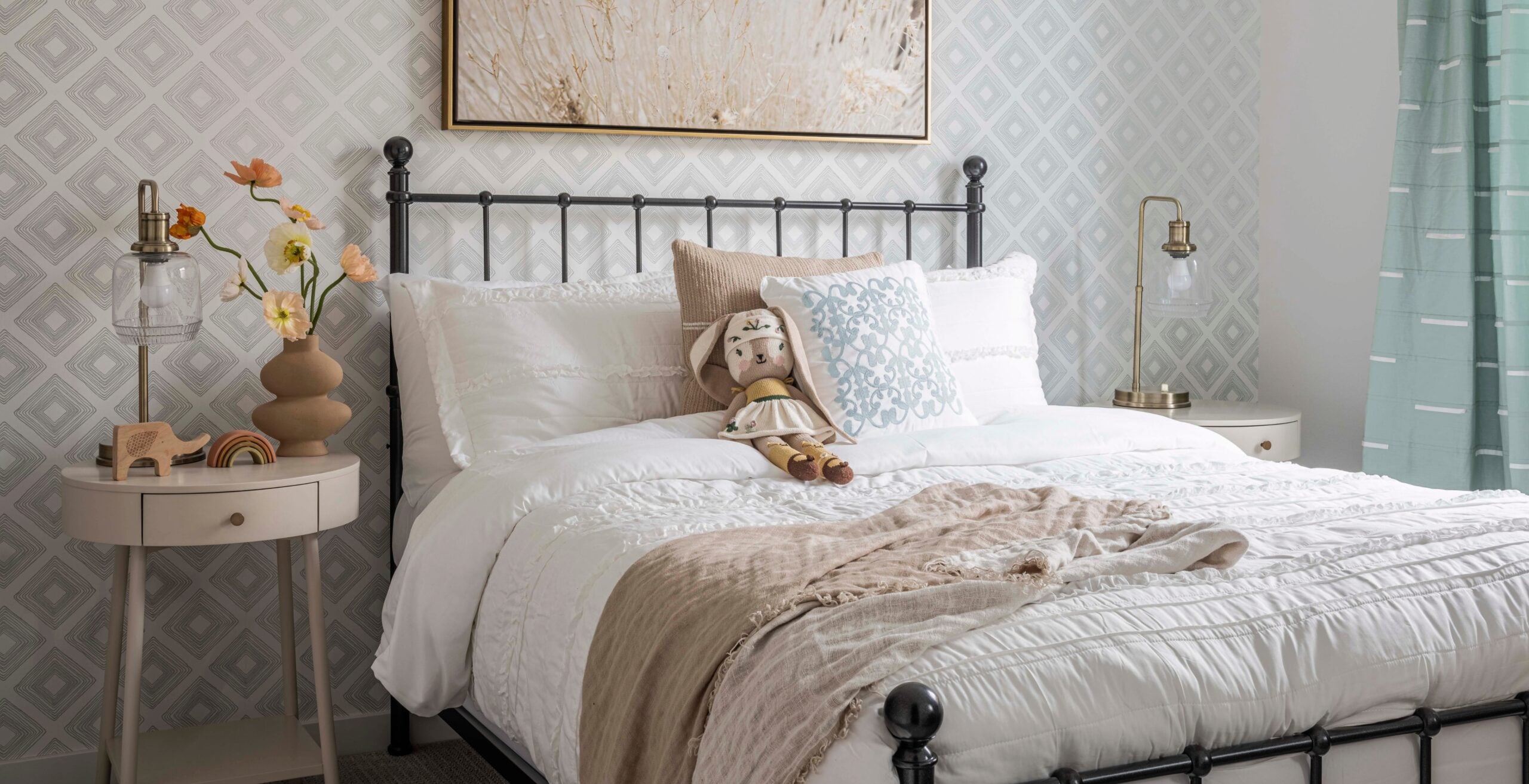
Photo: Kara Mercer
One of the most common mistakes I see is a home where every single room was painted in isolation, its own moment, its own color, with zero thought given to what’s happening in the room next door. Walk through a house like that, and it feels disjointed, like you’re moving between five different design projects instead of one cohesive home.
A whole home palette doesn’t mean everything has to match, or that you’re stuck painting every wall some version of greige. It means building a system: a handful of colors that relate to each other, so your home flows as you move through it. Here’s exactly how I approach it.
I have lots of paint tips to share! Check out The Paint Colors That Make A Room Feel Bigger, The Best Living Room Paint Colors, and The Paint Finish Guide For Every Room.
whole home paint palette
Start With a Whole Home Neutral
Before I choose a single accent color, I pick one warm neutral that’s going to show up throughout the house, hallways, trim, ceilings, maybe even the walls of a few connected rooms. This becomes the connective tissue of the whole palette. It doesn’t need to be the star of any one room; its job is to make the transition between rooms feel intentional rather than abrupt.
Learn How to Choose a Paint Color That Won’t Read Wrong.

Whole home paint palette
Build a Palette of 3-5 Colors
I know it’s tempting to give every room its own personality, but for a home to feel cohesive, I limit myself to 3 to 5 colors across the entire house, including your whole-home neutral. That might be one neutral, two supporting colors in adjacent rooms, and one or two bolder, more saturated colors reserved for spaces that are more closed off, like a powder room or a home office with a door that closes.
Whole home paint palette
Respect Sightlines, Not Just Room Boundaries
This is the step people skip. Before I finalize any color, I stand in each doorway and look at what’s visible from that spot, not just the room I’m painting, but whatever rooms are visible alongside it. If your living room is open to your kitchen, those two colors need to work together as a pair, not just individually. I’d rather choose two very complementary colors for connected spaces than two colors that are each beautiful on their own but clash the second you can see them together.





Photo: Kara Mercer
Whole home paint palette
Save Your Boldest Color for Your Most Enclosed Room
Every whole-home palette needs at least one moment of real drama, but I’m careful about where that goes. A bold, saturated color works best in a room with a door that closes and limited sightlines into the rest of the house: a powder room, a home office, a primary bedroom. That containment is what lets you go bold without it fighting with the rest of your palette.
Whole home paint palette
Keep Your Ceiling Color Consistent Throughout
I almost always keep one ceiling color, usually a soft, flat white or a shade or two lighter than my whole-home neutral, consistent across the entire main level of a house. It’s a small detail, but it does a lot of quiet work: your eye reads the ceiling as one continuous plane as you move from room to room, which reinforces that sense of flow even when the wall colors themselves are changing.

Whole home paint palette
A Sample Whole Home Palette
Here is a moody, earthy whole-home palette using Benjamin Moore paints.
- Swiss Coffee (OC-45) — Trim, doors, and ceilings. A warmer, creamier white to anchor the earthier palette.
- Pale Oak (OC-20) — Main living areas and hallways. Works as a warm neutral base that won’t fight with the richer colors elsewhere in the house.
- Saybrook Sage (HC-114) — Kitchen or bedrooms. A soft, muted sage that adds color while staying grounded and calm.
- Potter’s Clay (1221) — Bathroom or bedrooms. A warm terracotta that feels like you’re wrapped in sunshine, without being too bright.
- Salamander (2115-10) — Powder room or dining room (the enclosed room). A deep, warm green that reads rich and cave-like in a smaller, more contained space.
WHOLE HOME PAINT PALETTE
Frequently Asked Questions
How many paint colors should a whole house have?
I aim for 3 to 5 total, including your ceiling and trim color. More than that, and a home starts to feel chopped up and inconsistent as you move through it; fewer than that and it can feel a little flat and undifferentiated.
Should every room in an open floor plan be the same color?
Not necessarily, but any rooms that are visually connected need to work together as a pair, even if they’re not identical. I’ll often keep open-concept spaces in the same color family, just shifted slightly lighter or darker, rather than making them identical or wildly different.
What color should connect every room in the house?
Usually your trim and ceiling color. Keeping those consistent throughout, even as wall colors shift room to room, creates a quiet thread that ties the whole home together without limiting your color choices elsewhere.
Where’s the best place to use a bold, saturated paint color?
A room with a door that closes and minimal visibility into the rest of your home, think a powder room, a primary bedroom, or a home office. That containment lets you take a real risk without it clashing with your broader palette.
Do hallways need their own paint color, or should they match the whole-home neutral?
I almost always use my whole-home neutral in hallways specifically, since hallways are the connective spaces that touch nearly every room. Giving them a totally separate color usually creates more visual noise than personality.
Disclosure: This post contains affiliate links. If you make a purchase through these links, I may earn a small commission at no extra cost to you.